
Top B2B Brand Film Production Companies in the US
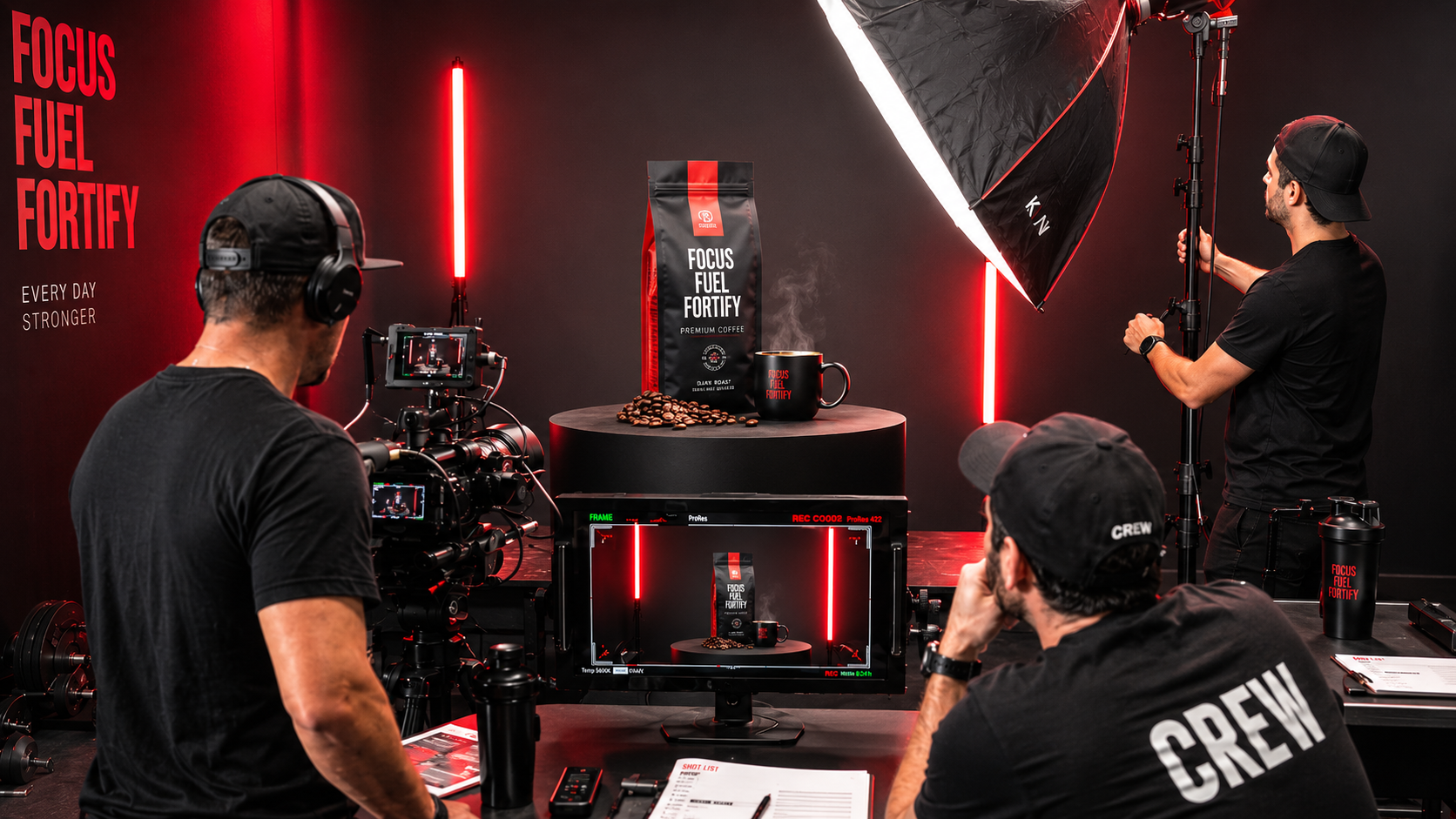
…Nope.
A B2B brand film is not your company overview video with nicer lighting and a dramatic piano track.
I know people treat it that way.
I’ve sat in those conversations.
“Let’s show the office. Maybe the CEO walking. Maybe some people collaborating near glass.”
Please.
A real B2B brand film has a harder job than that. It has to take the thing your company does, the thing your buyers care about, the thing your sales team keeps explaining on calls, and make it make sense fast.
Not kinda fast.
Actually fast.
Because your viewer is busy. They probably have twelve tabs open, a Slack message blinking, and someone asking for a “quick sync” that will absolutely not be quick.
That is why people search for the top B2B brand film production companies US.
They are not just looking for a crew with a camera, a drone, and a slow-motion hallway shot.
They need someone who can make a complicated company feel clear.
Maybe even interesting.
Wild concept, I know.
A good brand film can help sales teams open better conversations. It can help recruits understand the culture. It can help investors, partners, buyers, and internal teams hear the same story without needing a 42-slide deck and a second coffee.
That matters.
Because most B2B stories are not missing.
They are just hiding in annoying places.
They are in sales objections. Product demos. Founder rants. Customer calls. Random comments from the operations person who says one perfect sentence and then acts like it was nothing.
I love when that happens.
Someone says, “Honestly, the real reason this matters is…”
THERE.
That’s the line.
The right production company catches it before it gets buried under “scalable solutions” and other crimes against language.
Top B2B Brand Film Production Companies in the US
…Alright.
This is where listicles usually start wearing a blazer.
You know the vibe.
“Here are award-winning partners helping brands tell authentic stories through powerful content.”
I mean, sure.
But also, what does that even help you decide?
When you’re comparing the top B2B brand film production companies US, the real question is not “who has a nice reel?”
A lot of people have nice reels.
The better question is: who fits the kind of problem you’re trying to solve?
Because a SaaS launch film is not the same as a manufacturing brand story.
A recruiting film is not the same as an investor-facing company overview.
A customer proof piece is not the same as a cinematic anthem for an event opener.
Same broad category.
Very different jobs.
So here’s the useful version.
1. Sparkhouse
Sparkhouse is a strong choice for B2B companies that need the film to feel polished, but still practical.
That balance matters.
A lot of brand films look expensive and then do basically nothing after the launch email goes out. That’s not the move.
Sparkhouse makes sense when a company needs brand video, product video, animation, photography, social cutdowns, and other marketing assets to actually work together. Not in theory. In the real “sales needs this by Thursday” kind of way.
The sweet spot is making complex ideas feel more human without turning them into corporate soup.
A brand film should help someone understand the company faster.
Sparkhouse gets that.
2. Umault
Umault is the one I’d look at when the brand needs a little more punch.
Not chaos.
Punch.
They sit in that B2B video ad lane where the work needs to earn attention, not politely wait for it.
That can be especially useful for SaaS, cybersecurity, fintech, enterprise tech, or any category where every competitor’s website looks like it was designed inside the same navy-blue conference room.
You know exactly what I mean.
Umault may not be the safest pick for a quiet, traditional company overview.
But for a brand film with a sharper concept?
Yes.
B2B does not have to be beige.
3. Demo Duck
Demo Duck is useful when the explanation is the hard part.
And in B2B, it often is.
Some companies have a real product, real customers, real outcomes, and still somehow need ten minutes to explain what they do.
That is not a character flaw.
It is just B2B.
Demo Duck’s background in explainer videos and animation makes them a smart fit for companies where live-action alone will not carry the idea. Software workflows, healthcare platforms, finance tools, education products, data systems, all of that “invisible value” stuff benefits from visual translation.
The trick is tone.
Too cute feels lightweight.
Too technical feels like homework.
The middle is where the magic lives.
4. VeracityColab
VeracityColab feels like a good match for companies that care deeply about brand polish.
And yes, that sounds obvious.
But it is not.
I’ve seen strong footage get dragged down by clunky lower thirds, strange font choices, awkward graphics, or animations that look like they escaped from a 2016 webinar deck.
Tiny design choices can make a serious B2B company feel either sharp or weirdly unfinished.
VeracityColab seems well-suited for brand films where design, messaging, motion, and production need to live in the same universe.
Website.
Sales deck.
Event screen.
Product launch.
All connected.
That kind of consistency matters more than people admit.
5. Thinkmojo
Thinkmojo feels especially right for tech companies.
Not just because the work looks modern, although yes, that helps.
It seems more because they understand how product storytelling works.
A tech brand film has to do two jobs at once.
It has to create an emotional reason to care, and it has to explain enough of the product so the viewer is not left nodding politely while understanding nothing.
Too emotional, and it becomes vague.
Too explanatory, and congrats, you made a demo video with nicer music.
Thinkmojo is useful when motion design, product moments, interface visuals, launches, and positioning all need to work together.
Please, though.
No fake floating dashboards unless absolutely necessary.
And even then, think twice.
6. Bottle Rocket Media
Bottle Rocket Media feels like a practical pick for B2B teams that need a range of video support.
And I mean practical as a compliment.
Some companies do not only need one hero film. They need an event video, a leadership message, a motion graphics explainer, a product story, and maybe three social edits because someone just remembered LinkedIn exists.
Classic.
Bottle Rocket Media covers video production, motion graphics, events, and broader video marketing needs, which can be useful when a brand film is part of a larger content plan.
Smooth execution is not always the flashiest selling point.
But neither is missing your deadline.
So, yeah. It matters.
7. Levitate Media
Levitate Media makes sense for teams that need video often.
Some B2B companies are not looking for one giant cinematic moment.
They need a steady content engine.
Brand videos.
Explainers.
Testimonials.
Training videos.
Product clips.
Recruiting assets.
Sales videos.
The whole “marketing calendar is hungry again” situation.
Levitate feels like a fit for that kind of repeatable video need. It may not be the right partner for every ultra-custom, deeply cinematic brand film, but for companies that need consistent, business-friendly video across different goals, it belongs in the conversation.
And honestly?
Useful and consistent beats beautiful and forgotten.
I’ll take that hill.
Small hill. Still taking it.
8. Indigo Productions
Indigo Productions has that bigger New York production feel.
Corporate films. Commercials. Branded content. Events. Executive pieces. Moving parts.
Lots of moving parts.
For B2B companies, that can be helpful when the video needs polish, scale, and a certain amount of boardroom confidence.
Think leadership films, company overviews, investor-facing content, event openers, or brand stories where the audience expects the work to feel substantial.
The caution is simple.
Polished should not mean lifeless.
That happens way too easily in corporate video.
One minute you’re making a serious brand film.
The next minute someone is shaking hands beside glass walls while the music acts like a bank just discovered hope.
No thanks.
Keep the polish.
Keep the pulse.
9. Colormatics
Colormatics is worth looking at when the film needs more campaign energy.
Not louder.
Not gimmicky.
Just more alive.
Some B2B videos feel like their entire purpose is to prove the company owns a conference room. We get it. There’s glass. Fantastic.
Colormatics feels better suited for brands that want the film to connect with marketing, advertising, launches, and broader awareness work.
That can be useful if the brand film is not meant to sit quietly on the homepage.
Maybe it needs cutdowns.
Maybe it needs paid support.
Maybe it needs to create a little momentum instead of politely existing.
Among the top B2B brand film production companies US, this is a good lane to consider when the content needs pace.
10. Localeyes Video Production
Localeyes Video Production feels like a solid option for straightforward business video needs.
And straightforward is not a bad word.
Sometimes you do not need a twelve-week creative excavation.
You need a clean company overview.
A product story.
A testimonial.
A social cutdown.
A recruiting video.
Something clear, professional, and usable without turning the whole project into a spiritual journey.
Localeyes makes sense for B2B teams that want the message to land, the people to feel real, and the production to feel polished without becoming overly precious.
Honestly, that is a very real need.
Not every brand film has to enter the room wearing a cape.
11. New Evolution Video
New Evolution Video is a Southern California option that can make sense when proximity matters.
And proximity matters more than teams think.
If your executives, office, lab, facility, warehouse, or customers are in California, keeping the production local can save budget, simplify scheduling, and reduce the amount of “wait, who is flying where?” nonsense.
Nobody misses that.
New Evolution Video is worth considering for corporate videos, brand stories, commercial-style pieces, event content, and product-focused work where the goal is professional and business-minded.
Maybe not the weirdest creative swing.
But polished, clear, and local?
That can be exactly right.
12. Early Light Media
Early Light Media leans human.
That is the simplest way to say it.
More documentary.
More cinematic.
More interested in the person inside the story.
For the right B2B brand, that can be powerful.
Healthcare, education, nonprofits, associations, mission-driven companies, purpose-heavy teams, these are the places where human storytelling can do real work.
But here is the catch.
You cannot fake heart.
People can smell fake heartwarming from six miles away.
Maybe farther.
If the story is real, though, and the interview subject says something honest that does not sound rehearsed, that kind of film can stick with a viewer longer than another polished company montage.
13. LAI Video
LAI Video feels like a smart fit for organizations with complicated messages and a lot of stakeholders.
Associations.
Advocacy groups.
Healthcare.
Finance.
Education.
Technology.
Basically, the kinds of places where every sentence gets reviewed twice and someone eventually says, “Let’s have legal look at that.”
Of course.
The value here is being able to explain, persuade, and still survive the approval process without turning the video into a policy memo with b-roll.
That is harder than it sounds.
Among the top B2B brand film production companies US, LAI Video belongs in the careful-messaging lane.
Campaign thinking.
Stakeholder awareness.
Still needs a pulse.
14. Beverly Boy Productions
Beverly Boy Productions is useful when the project has a footprint problem.
Multiple locations.
Multiple executives.
Customer interviews in different markets.
Events.
Corporate films.
Branded content.
Basically, the kind of project where half the battle is getting the right crew in the right place without the schedule catching fire.
That is real work.
For B2B companies with national needs, this kind of reach can help a lot.
Just make sure the message is locked before the machine gets moving.
Because a big production setup can make a vague idea very efficiently.
And somehow, that is worse.
Fast confusion.
No one needs it.
15. Lemonlight
Lemonlight is a good fit for teams that need video at scale.
Not every B2B company is making one major brand film and then disappearing for three years.
Some need steady video output.
Paid ads.
Explainers.
Testimonials.
Recruiting content.
Product clips.
Social edits.
Sales assets.
Lemonlight fits that world because process, volume, and repeatability are part of the value.
Those words are not sexy.
But when the marketing team is juggling campaigns, launches, and internal requests from six departments, they become very attractive.
Among the top B2B brand film production companies US, Lemonlight makes sense when consistency matters as much as the big hero piece.
Maybe more.
Depends on how hungry the content calendar is.
What to Look for in a B2B Brand Film Production Company
Before you compare the top B2B brand film production companies US, I’d slow down.
Start with the boring question.
What is this video supposed to do?
Not “what style do we like?”
Not “can it be cinematic?”
Not “can it feel like Apple?”
That last one shows up way too often on B2B kickoff calls. It’s basically a free space on the bingo card.
Ask this instead: what should the viewer understand after watching?
Should they trust the company more?
Should they finally understand the product?
Should they feel comfortable forwarding it to their boss?
Should they want to work there?
Different goal. Different film.
That’s the part people skip, and then everybody acts shocked when the final video feels pretty but pointless.
Not ideal.
1. B2B Strategy, Not Just Production
Strategy sounds expensive.
Sometimes it is.
But here, it really means asking decent questions before anyone starts talking about lenses, lighting, or whether the lobby gets nice sun at 4:30.
Who is watching?
What do they already believe?
What are they confused about?
Where does the sales conversation slow down?
What does your team keep explaining over and over again?
That last one is usually where the good stuff lives.
I’ve heard founders explain their company on messy Zoom calls, with Slack pings, weird audio, somebody’s dog making a cameo, the whole thing. And somehow, in the middle of that chaos, they say the clearest version of the business.
Then you check the website and it says, “We enable scalable transformation through integrated solutions.”
ARE YOU KIDDING ME.
No one talks like that. Not even the person who wrote it.
A strong B2B video partner knows how to pull out the real message and protect it from getting polished into mush.
Among the top B2B brand film production companies US, this is a big separator.
Some teams make things look good.
The better teams make the company easier to understand.
2. Strong Storytelling and Messaging Capabilities
A lot of B2B companies are not boring.
Their messaging is boring.
Big difference.
The product might solve a real problem. The team might know the industry inside out. The customer impact might actually be kind of fascinating.
Then the script opens with, “In today’s fast-moving digital landscape…”
I need to lie down.
Good storytelling brings the company back to earth.
What was broken before?
Who felt the pain?
What changed?
What does the customer no longer have to worry about?
Why should anyone care on a regular Tuesday when their inbox already looks like a disaster zone?
That is usually the story.
Not the tagline.
Not the brand pillar.
Not the sentence that got approved by six people and loved by none.
The real story is in the specific detail.
The dashboard that saves a team hours.
The platform that helps reviewers catch the claims that matter.
The process that keeps operations from chasing problems after the fact.
Specific beats polished almost every time.
Maybe not in a boardroom.
But definitely in a film.
3. Experience With Complex or Technical Companies
Some brands are easy to film.
Pretty product. Beautiful space. Obvious result.
Great. Love that for them.
B2B often does not give you that gift.
Sometimes the value is hidden inside data, compliance, automation, risk reduction, supply chains, medical review tools, or software workflows only three people fully understand.
And one of them is somehow always on vacation.
Of course.
That is where the production partner has to work harder.
They need to know when to use interviews, when to bring in motion graphics, when to show the old messy process, when to use customer proof, and when to stop explaining before the viewer quietly opens their email.
Because they will.
No mercy.
The best partners can make technical work feel clear without dumbing it down.
That balance matters.
You need accuracy for the experts, but simplicity for the person approving the budget.
The top B2B brand film production companies US should understand both.
4. High-Quality Production and Post-Production
Yes, the film needs to look good.
Obviously.
Bad audio makes smart people sound less credible. Weird lighting makes a strong company feel strangely cheap. A slow edit makes ninety seconds feel like compliance training from 2012.
Painful.
Production quality is not just about beauty.
It is about trust.
Good interviews. Clean sound. Strong framing. Thoughtful locations. B-roll that supports the story instead of just filling space because someone liked the shot.
Post-production matters just as much.
Editing controls the pace.
Music changes the emotional temperature.
Color makes everything feel intentional.
Motion graphics can help a technical idea click, but only when they feel like they belong to the brand.
Not like someone dragged in a template at midnight and whispered, “Eh, good enough.”
We noticed.
Everyone noticed.
5. Ability to Create Videos for Multiple Business Goals
A brand film should not be one lonely file sitting on the homepage forever.
That’s sad.
One smart shoot can create a lot of useful content.
Sales cutdowns.
Recruiting clips.
LinkedIn edits.
Event openers.
Customer proof points.
Product teasers.
Internal comms.
But please do not shove all of that into one video.
That is how you get a four-minute monster trying to explain the product, recruit engineers, impress investors, introduce the CEO, mention the new office, and somehow include the dog.
The dog is cute.
Still no.
Plan the ecosystem upfront.
A strong production partner should help you think about the main film and the smaller assets around it, so the content keeps working after launch week.
That is where the investment starts making more sense.
Not in the “one big video and hope everyone watches it” way.
In the “we actually planned for how this will get used” way.
Much better.
6. Clear Process, Communication, and Timeline
Process is boring until it is missing.
Then it becomes the whole problem.
B2B video projects usually involve marketing, leadership, product, sales, legal, customers, brand teams, and one mystery stakeholder who appears at the end with “big-picture thoughts.”
Incredible timing.
A good production partner keeps the path clear.
Discovery.
Messaging.
Script or interview outline.
Pre-production.
Shoot.
Edit.
Review.
Revision.
Delivery.
Nothing fancy.
Just necessary.
You should know who approves what, where feedback goes, how notes are handled, and what happens if someone misses a deadline.
Creative work does not need chaos to be good.
Most of the time, chaos just gives you uglier file names.
final_FINAL_v11_reallyuse.mp4
Chilling.
How to Choose the Right B2B Brand Film Production Partner
…Here’s the part nobody wants to admit.
Choosing the wrong production company does not always mean choosing a bad one.
Sometimes the company is talented.
The reel looks great.
The team seems nice.
The proposal has all the right words, maybe even too many of them.
And still, the final film lands with a tiny sad thud because the partner was built for a different job.
That is brutal.
So before picking from the top B2B brand film production companies US, I’d get painfully honest about what you actually need.
Not what looks cool.
Not what your competitor just posted on LinkedIn.
Not what the CEO liked from some brand film made by a company with a $600 million marketing budget.
What do you need this specific film to do?
That question will save you money, time, and possibly three rounds of “can we make it more ownable?” comments.
1. Define the Goal of the Brand Film
Start with the job.
One job.
I know that sounds restrictive, but it is actually freeing.
Is the film supposed to help sales explain the company faster?
Support a product launch?
Recruit better candidates?
Introduce the leadership team?
Build trust before a demo?
Open an event?
Give investors a clearer sense of the company’s direction?
Pick the primary goal first.
The film can support other things, sure. But if everything matters equally, the video usually turns into soup.
Cold soup.
Nobody wants cold soup with stock music.
The best brand films have a spine. You can feel the point underneath every interview, every line, every shot, every edit.
When the goal is clear, the creative choices get easier.
When the goal is vague, everyone starts arguing about music.
Classic.
2. Match the Agency to Your Industry and Audience
Do not only ask, “Have they worked in our industry?”
That helps, but it is not enough.
Ask, “Do they understand the audience we’re trying to move?”
Because B2B audiences are not all the same.
A technical buyer wants accuracy and proof.
An executive wants the point quickly.
A department head wants to know how this affects their team.
A recruit wants to know if the culture is real or just another careers page wearing a hoodie.
An investor wants confidence.
A customer wants to feel seen.
Same brand. Different viewer. Different pressure.
The right partner understands the person on the other side of the screen, not just the category on your website.
Perhaps they have not worked with your exact niche before.
That can be fine.
But they need to know how to listen, ask sharp questions, and translate complicated information without making everyone sound like they are reading from a committee-approved napkin.
I’ve seen that napkin.
It’s never good.
3. Review Their Portfolio Beyond Visual Quality
A reel is not enough.
A reel is a highlight tape.
It is designed to make you say, “Ooooh, nice.”
And sure, nice matters.
But watch full videos.
Seriously.
I know it takes longer. Do it anyway.
Can you understand the company by the end?
Do the interviews feel natural, or does everyone sound like they were told to “be authentic” five minutes before filming?
Does the story build?
Does the edit move?
Do the graphics help, or are they just decorative little rectangles floating around because someone discovered motion blur?
Does the ending land?
Or does it just fade to a logo while the music gets emotionally ambitious for no reason?
That last one happens a lot.
Visual quality is the entry ticket.
Clarity is the point.
Among the top B2B brand film production companies US, the best fit is usually the one whose full work still makes sense after the pretty montage is over.
4. Ask About Strategy and Messaging Before Production
This is where I’d poke a little.
Politely.
Ask how they get to the message.
Who leads discovery?
Who writes the script?
Who interviews the team?
Who challenges vague language?
Who decides what not to include?
That last question is underrated.
A strong brand film is not just made by choosing good ideas. It is made by cutting the extra ones.
Every B2B company has too much to say. That is normal.
The partner’s job is to help you decide what belongs in this film and what should become a sales cutdown, explainer, web section, follow-up email, event clip, or honestly, nothing at all.
Not every thought deserves screen time.
I say that with love.
If a production company says they will “pull messaging from your website,” be careful.
Your website may not be wrong, but it is often not the cleanest source for spoken video language.
Web copy can survive a little stiffness.
Video cannot.
Video exposes weird phrasing instantly.
5. Understand Their Production Process
Ask the boring questions.
Please.
Where do approvals happen?
How many revision rounds are included?
Who handles interview prep?
When is the script locked?
What happens if a customer review takes too long?
How are notes collected?
Who decides when a cut is final?
What formats are delivered?
What happens if the team suddenly wants five extra social edits?
None of this sounds glamorous.
Good.
It is not supposed to.
It is supposed to prevent chaos.
B2B projects can have a lot of hands on them. Marketing, sales, product, leadership, legal, customer success, brand, and sometimes a mystery person who appears late and says, “I’m just seeing this now.”
Cool cool cool.
A clear process keeps that from destroying the work.
Creative freedom is great.
Creative free-for-all is how you end up with filenames that look like a cry for help.
6. Consider Long-Term Video Marketing Needs
Think beyond the hero film.
That is where a lot of companies miss easy value.
If you are already filming executives, customer interviews, office scenes, product moments, facilities, or team culture, what else can be captured while everyone is there?
Sales clips?
Recruiting snippets?
LinkedIn cutdowns?
Homepage loops?
Event openers?
Short customer proof moments?
Internal culture pieces?
A few vertical edits for paid social?
Not everything belongs in the main film.
Please tattoo that somewhere tasteful.
But a smart production plan can create a bigger content library without making the hero piece feel bloated.
That is the trick.
The top B2B brand film production companies US should help you think this through before shoot day, not after everyone has gone home and someone says, “Wait, did we get a version for the sales team?”
No.
We did not.
And now everyone is sad.
Final Thoughts on B2B Brand Film Production Companies
A B2B brand film is not there to make the company look expensive.
At least, not only that.
It is there to make the company easier to believe.
Easier to understand.
Easier to remember.
That sounds simple until you try doing it with a complex product, five stakeholders, a cautious legal team, and a buyer who has already seen twelve “innovative solution” videos this week.
No pressure.
The right production partner brings more than cameras. They bring judgment. They know when the story needs more emotion, when the explanation needs more structure, when the visuals need more restraint, and when the script needs fewer words because nobody, and I mean nobody, wants to watch a brand film that behaves like a brochure with background music.
The best partner also understands the business use.
Where will the film live?
Who needs to use it?
What objections should it help soften?
What does the sales team need?
What does recruiting need?
What does leadership need?
What can be repurposed without watering down the main piece?
That is the difference between a video that gets launched and a video that gets used.
Big difference.
So yes, compare portfolios.
Look at production quality.
Review the strategy process.
Ask about timelines.
Check whether they understand your audience.
But the real question is this: can they make your company make sense to someone who does not live inside your company every day?
That is the whole thing.
Because the best B2B brand films do not just say, “Look at us.”
They say, “Here is why this matters.”
And when that lands?
That is when the film starts doing actual work.